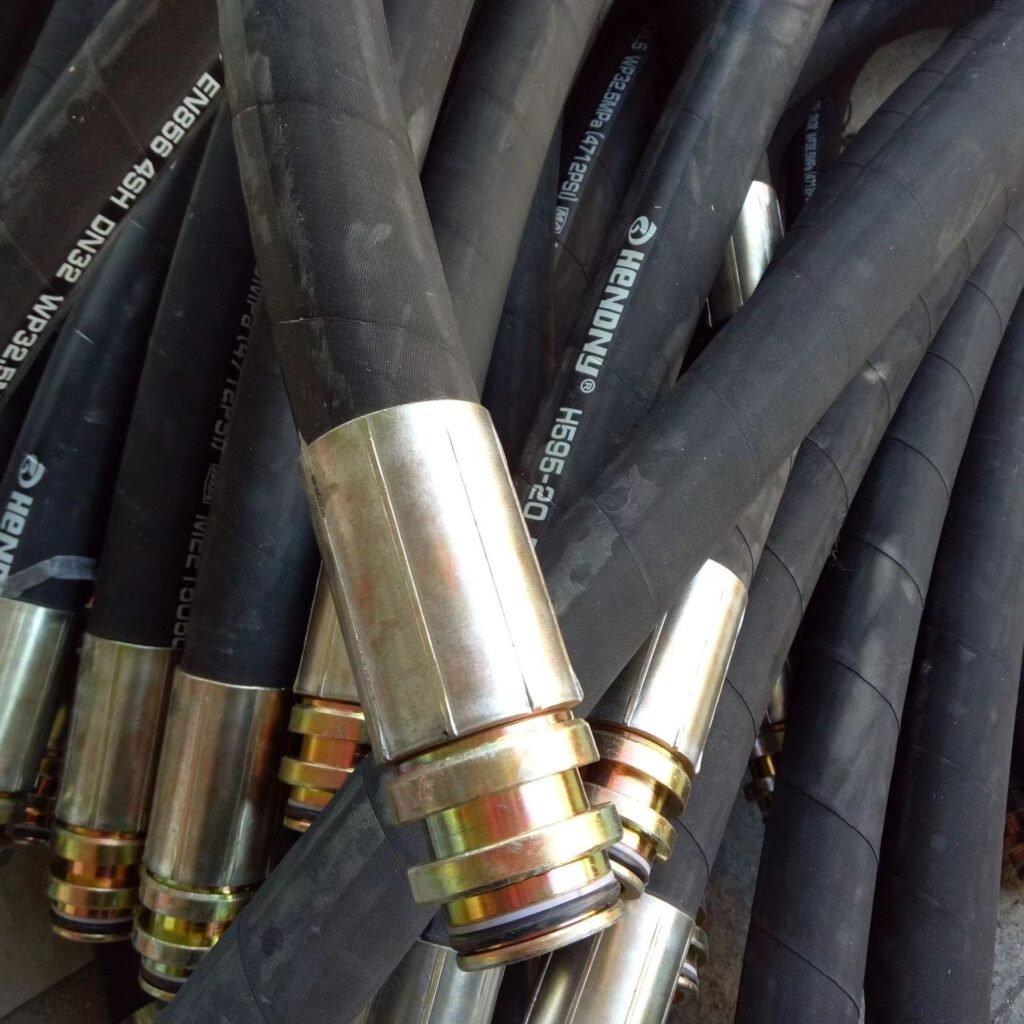
Hydraulic hoses are used to transfer hydraulic fluid between various parts of a machine.
Hydraulic oil is a type of oil specifically designed to transmit power under pressure, and is typically used to power various components such as hydraulic cylinders or motors.
How do hydraulic hoses work?
Hydraulic hoses work by using hydraulic fluid to transfer force between two different components. When the fluid is pressurized, it generates force that can be used to power different components. Hydraulic hoses act as flexible connections, allowing fluid to move from one part of a machine to another.
Hose are connected to hydraulic components using fittings designed to create a tight seal and prevent leaks. When hydraulic fluid is pumped into the hose, pressure is created, causing the hydraulic components to move or operate. The flexibility of the hose allows the components to move without putting unnecessary stress on the system.
Because hydraulic hoses are a critical part of many systems, they must be properly designed and maintained to ensure their proper functioning and prevent potential leaks or malfunctions. This includes selecting the appropriate size and type of hose for the specific application, regularly inspecting for signs of wear, and replacing damaged hoses.
Hydraulic hose type
Several different types of hydraulic hoses are available, each designed for a specific application. The following are the most common types:
High-pressure hydraulic hoses: These hoses are designed to withstand high-pressure applications and are typically used in heavy machinery, construction equipment, and other industrial applications.
Low-pressure hydraulic hoses: These hoses are designed for applications with low-pressure requirements and are typically used with small equipment and machinery.
Multi-coil hydraulic hoses: These hoses have multiple layers of reinforced material and are designed for applications requiring high-pressure resistance and flexibility.
Hydraulic hose connector
Hydraulic hose couplings are accessories or connectors used to connect two or more hydraulic hoses, or to connect hoses to hydraulic components such as pumps, cylinders, valves, or motors.
Hydraulic hose couplings are accessories or connectors used to connect two or more hydraulic hoses, or to connect hoses to hydraulic components such as pumps, cylinders, valves, or motors.
There are several types of hydraulic hose connectors, including:
Direct connectors: for connecting cylinders or components in a straight line; Elbow connectors: for connecting cylinders or components at different angles; T-connectors: for connecting three hydraulic hoses or components; Cross connectors: for connecting four hydraulic hoses or components; Quick connectors: for quickly and easily connecting and disconnecting hydraulic hoses or components.
Hydraulic hose connectors are typically made of metal, such as steel or brass, and are designed to withstand high pressure and high temperatures. Choosing the right type of connector for your hydraulic system is crucial to ensure safe and efficient operation.