NBR, PTFE, and Stainless Steel: A Comprehensive Performance Comparison and Selection Guide
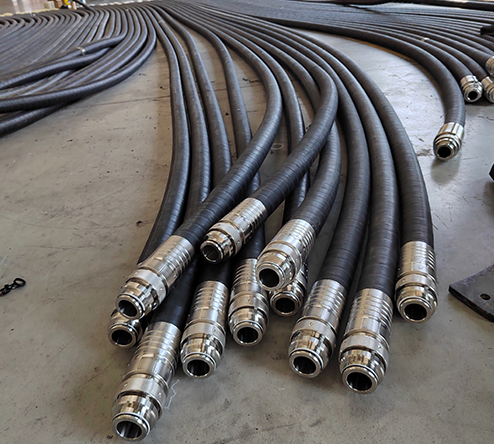
The performance, lifespan, and applicability of hydraulic hoses are largely determined by their manufacturing materials. Choosing the right material is crucial for avoiding malfunctions and optimizing costs when dealing with different working media, pressures, temperatures, and environments. This article provides an in-depth comparison of the performance of three main categories of hydraulic hose materials: rubber hoses, thermoplastic hoses, and rigid metal hoses, offering an authoritative guide for your selection.
I. Synthetic Rubber Hose: A Balanced and Versatile Option Rubber hoses are the most common choice, widely popular for their good flexibility, resistance to pulse fatigue, and cost-effectiveness.
Nitrile butadiene rubber (NBR): This is the most standard inner rubber layer material, exhibiting excellent resistance to petroleum-based hydraulic fluids. Its operating temperature range is approximately -40°C to +100°C (up to 120°C for short periods). Suitable for most industrial applications, such as construction machinery and machine tools.
Hydrogenated nitrile butadiene rubber (HNBR): Based on NBR, it undergoes hydrogenation treatment, significantly improving heat resistance (up to 150°C), ozone resistance, and abrasion resistance. Commonly used in more demanding applications, such as high-temperature areas like engine compartments.
Outer rubber layer material: Chloroprene rubber (CR) is typically used due to its excellent weather resistance, abrasion resistance, and flame retardancy, effectively protecting the reinforcing layer.
II. Thermoplastic Hose: A Fusion of Lightweight and High Performance
Thermoplastic hoses use plastic polymers as inner and outer layers, reinforced with high-strength fibers. They are generally lighter, more flexible, and have smoother inner walls, reducing pressure loss.
Polyamide (PA11/PA12): Derived from castor oil, it is a representative of high-performance thermoplastic materials. It has excellent oil resistance, chemical resistance, lightweight, and low permeability. It has a wide operating temperature range (-40°C to +120°C) and extremely high pulse fatigue life. It is commonly used in applications with extremely high weight sensitivity and reliability requirements, such as aerospace, racing, and high-end industrial equipment.
Polytetrafluoroethylene (PTFE): Commonly known as “Teflon,” it has extreme chemical inertness, resisting almost all chemicals, and has an extremely low coefficient of friction. It has an extremely wide operating temperature range (-70°C to +260°C). However, its flexibility is relatively poor, and its cost is high. It is typically used in extreme temperature and chemical environments, such as steel mills and chemical plants.
III. Rigid Metal Tubing: The Cornerstone of Ultra-High Pressure and Stability
Metal tubing (seamless steel tubing, copper tubing) is used in stationary parts of hydraulic systems where movement is not required.
Carbon steel and stainless steel tubing: Offer the highest pressure ratings and rigidity, with virtually no expansion issues, and excellent high-temperature and aging resistance. Disadvantages include complex installation (requiring bending and welding) and poor corrosion resistance (carbon steel requires surface treatment). Stainless steel (such as 304 and 316) is commonly used in food, pharmaceutical, and marine equipment due to its excellent corrosion resistance.
Copper tubing: Easy to bend and install, with good corrosion resistance, but lower pressure resistance and potential reaction with some hydraulic oils; it is less commonly used in modern high-pressure systems.
Through the above comparisons, engineers can make the most scientific and reasonable material selection based on specific pressure, temperature, medium, cost, and space requirements, thereby laying a solid and reliable foundation for hydraulic systems.