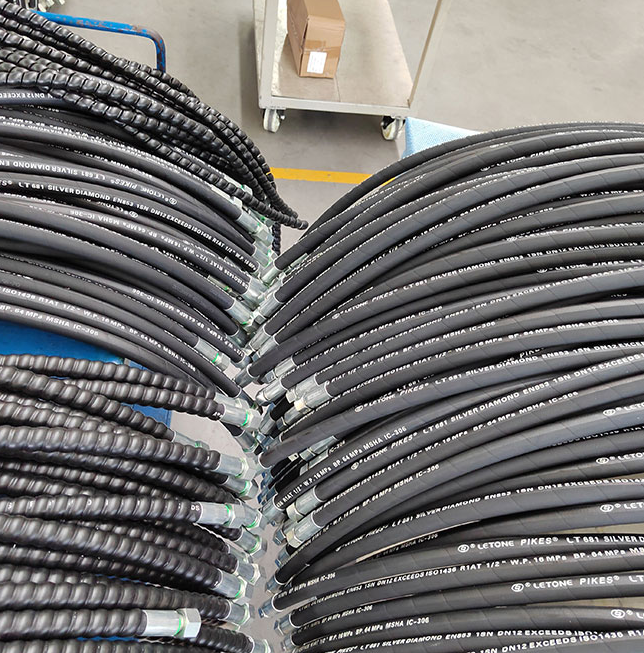
Proper selection and use of hydraulic hoses are crucial for the normal operation and safety of hydraulic systems. The following are guidelines for selecting and using hydraulic hoses:
- Material Selection: The material of the hydraulic hose should be selected based on the specific working environment and requirements. Common hydraulic hose materials include carbon steel, stainless steel, and copper alloys. Carbon steel hydraulic hoses have high strength and pressure resistance, suitable for most working conditions. Stainless steel hydraulic hoses have good corrosion resistance, suitable for working conditions with corrosive media. Copper alloy hydraulic hoses have good thermal conductivity, suitable for high-temperature working conditions. Economic and reliability factors should also be considered when selecting materials.
- Specification Selection: The specifications of the hydraulic hose should be determined based on the working pressure and flow requirements of the hydraulic system. Working pressure is an important reference indicator for selecting hydraulic hose specifications; the pressure-bearing capacity of the hydraulic hose should be higher than the maximum working pressure of the system. Flow rate refers to the fluid carrying capacity of the hydraulic hose; selecting an appropriate inner diameter and wall thickness will meet the system’s flow requirements.
- Connection Method: Hydraulic hoses can be connected by welding, threading, and clamps, among other methods. Welded connections are suitable for high-pressure and high-flow hydraulic systems, offering good connection tightness. Threaded connections are suitable for general working conditions, facilitating disassembly and maintenance. Clamp connections are suitable for applications requiring easy disassembly and installation. When selecting a connection method, factors such as the system’s working pressure and temperature must also be considered.
- Installation and Usage Precautions: When installing hydraulic hoses, the following points should be noted: First, ensure the hydraulic hoses are not bent, deformed, or damaged to guarantee smooth fluid flow and pressure transmission. Second, the installation location of the hydraulic hoses should avoid external impacts and vibrations to prevent wear and leakage. Additionally, regularly inspect and maintain the appearance of the hydraulic hoses and connections to promptly identify and address potential problems.
In conclusion, the correct selection and use of hydraulic hoses are crucial for ensuring the normal operation and safety of the hydraulic system. By rationally selecting materials and specifications, choosing suitable connection methods, and paying attention to installation and usage precautions, the quality and performance of the hydraulic hoses, as well as the stability and reliability of the hydraulic system, can be ensured. In case of doubt, it is recommended to consult a professional hydraulic engineer or supplier for more specific guidance and advice.