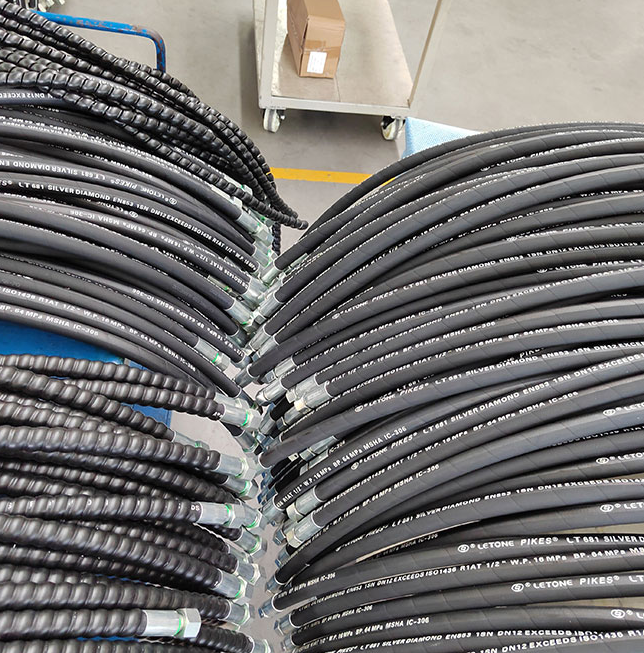
Here are some practical tips for maintaining hydraulic hoses:
- Regular Cleaning: Use specialized cleaning agents and equipment to regularly clean the inside of the hydraulic hoses. Circulate the cleaning fluid through the hoses to remove internal deposits, dirt, and impurities. After cleaning, ensure the hoses are dry and clean.
- Visual Inspection: Regularly inspect the appearance and connections of the hydraulic hoses for damage. Pay special attention to the joints and seals to ensure there are no leaks or damage. Also, check the hose surface for obvious wear, corrosion, or scratches; if any are found, replace them immediately.
- Lubrication Maintenance: The connections and moving parts of the hydraulic hoses, such as piston rods and valves, require regular lubrication. Use a suitable lubricant, applying or spraying it to the areas requiring maintenance to reduce friction and wear.
- Regular Replacement: Replace the hydraulic hoses regularly according to the usage of the hydraulic system and the manufacturer’s recommendations. New hoses ensure the reliability and performance of the system. When replacing, select the appropriate specifications and materials to ensure compatibility with other components in the system.
- Prevent Excessive Bending and Compression: Avoid excessive bending and compression of hydraulic hoses during use to prevent damage to their internal structure and materials. Maintain the minimum radius of curvature during installation and use, avoiding excessive bending.
- Control Temperature and Pressure: Carefully control the operating temperature and pressure of hydraulic hoses. Excessive temperature and pressure can damage the hoses, leading to deformation or rupture. When designing and using the hydraulic system, select appropriate operating parameters and ensure the system’s cooling and pressure control equipment functions properly.
- Learning and Training: Understand the basic knowledge of hydraulic systems and hydraulic hoses, and receive relevant training. Mastering the working principles, common faults, and maintenance methods of hydraulic systems will allow for better maintenance and upkeep of hydraulic hoses.
- Adjustment and Updating: Adjust and update the design and specifications of hydraulic hoses according to the actual operating conditions and needs of the hydraulic system. Select more wear-resistant, corrosion-resistant, and high-strength materials to improve the service life and performance of the hoses.
By adopting the above practical techniques, hydraulic hoses can be effectively maintained, their service life extended, and the reliability and efficiency of the hydraulic system improved. Regular cleaning, inspection, lubrication, and replacement of hydraulic hoses are common maintenance procedures. At the same time, it is also important to properly control temperature and pressure, and avoid excessive bending and compression of the hoses. Regular learning and training to understand the basic knowledge and maintenance methods of hydraulic systems can help in better maintaining hydraulic hoses.