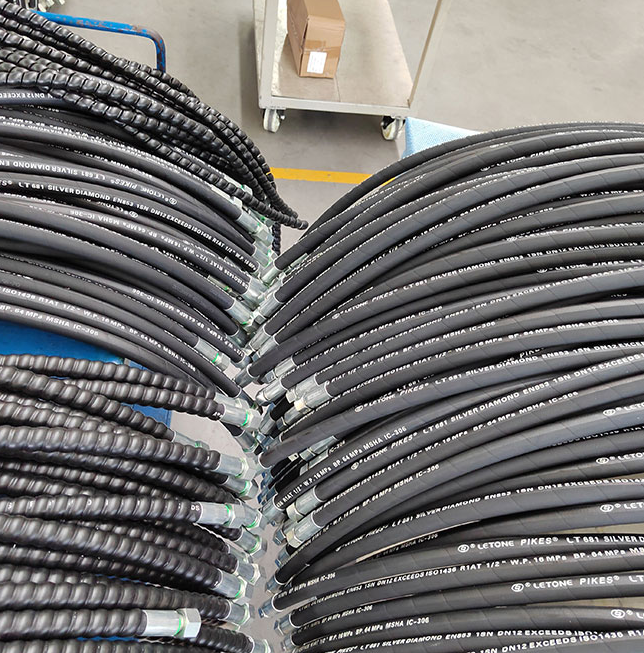
Hydraulic pipe connectors can be classified according to their structure and connection method. Below are some common types of connectors and their advantages:
- Threaded Connector: Threaded connectors are one of the most common and widely used connectors. They typically consist of internal and external threads, connecting the oil pipe through the rotation and tightening of the threads. Threaded connectors offer advantages such as reliable connection, easy disassembly and maintenance. Furthermore, they are suitable for high-pressure and high-temperature environments and have good sealing performance.
- Flange Connector: A flange connector is a connector that connects via flanges. It typically consists of two flanges and bolts, connecting the oil pipe by tightly connecting the flanges together. Flange connectors offer advantages such as stable connection and high load-bearing capacity, suitable for high-pressure and high-flow hydraulic systems. Additionally, flange connectors are simple to install, easy to maintain and replace.
- Clamp Connector: A clamp connector is a connection method that uses clamps to fix the oil pipe to the connector. Clamp connectors typically consist of a connector with threaded holes and a clamp. The oil pipe is fixed to the connector by rotating the clamp and the threaded holes of the connector. Clamped couplings offer advantages such as easy installation and reliable fastening. Furthermore, they are suitable for smaller diameter oil pipes, making installation and replacement very convenient.
- Pin-type couplings: Pin-type couplings are connectors that connect via a pin and a slot. They typically consist of a slotted connector and a pin. The oil pipe is secured to the coupling by inserting the pin into the slot. Pin-type couplings offer advantages such as easy installation and quick disassembly. They are also suitable for applications requiring frequent oil pipe changes, providing convenience and speed.
- Quick-connect couplings: Quick-connect couplings are connectors that connect via a quick-connect and release mechanism. They typically consist of internal and external quick-connect mechanisms, allowing for quick connection and release by pushing or pulling the mechanism. Quick-connect couplings offer advantages such as quick installation and easy disassembly. They are also suitable for applications requiring frequent oil pipe changes, improving work efficiency.
Different types of couplings have their own advantages. Choosing the appropriate coupling depends on the hydraulic system’s operating environment, pressure requirements, flow requirements, and operational needs. When selecting a connector, it is necessary to consider the reliability of the connection, the ease of installation and maintenance, and its ability to adapt to different working environments and requirements.