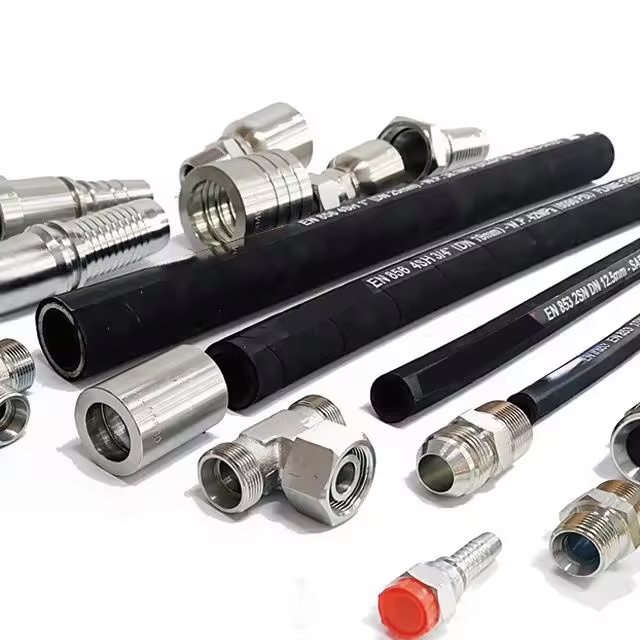
The compatibility of hydraulic hoses and fittings needs to be selected based on the specific requirements and operating conditions of the hydraulic system. Below is a comprehensive list of common hydraulic hose and fitting compatibility options for your reference:
- Threaded Connections: Common threaded connections include British Standard threads (NPT, BSP) and metric threads (BSPP, BSPT, M, G). Threaded connections are suitable for low-pressure or medium-low-pressure hydraulic systems, and the tight connection of the threads enables the connection between the hydraulic hose and fitting.
- Flange Connections: Flange connections are suitable for high-pressure hydraulic systems. The sealing and strength of the flange ensure the connection between the hydraulic hose and fitting. Common flange connections include SAE (American Standard) and ISO (International Standard).
- Clamp Connections: Clamp connections are suitable for large-diameter hydraulic hoses. Clamps secure the hose and fitting together to achieve the connection. Common clamp connections include V-clamps and U-clamps.
- Quick-Connect Connections: Quick-connect couplings are a convenient and quick connection method, suitable for applications requiring frequent connection and disconnection. Common quick couplings include those conforming to ISO 7241, ISO 16028, and ISO 5675.
- Flexible Sleeve Connection: Flexible sleeve connections are a type of flexible connection suitable for hydraulic systems requiring a certain degree of deflection and displacement. They reduce stress concentration caused by vibration and impact. Common flexible sleeve connections include metal hoses and rubber hoses.
When selecting hydraulic hoses and fittings, the appropriate connection method and specifications must be determined based on factors such as the hydraulic system’s working pressure, operating temperature, and flow requirements. Simultaneously, it is crucial to select high-quality hydraulic hoses and fittings to ensure their quality and sealing performance, thereby guaranteeing the safe and reliable operation of the hydraulic system. It is best to consult a professional hydraulic system supplier or engineer to select the appropriate hydraulic hose and fitting compatibility method based on specific requirements.