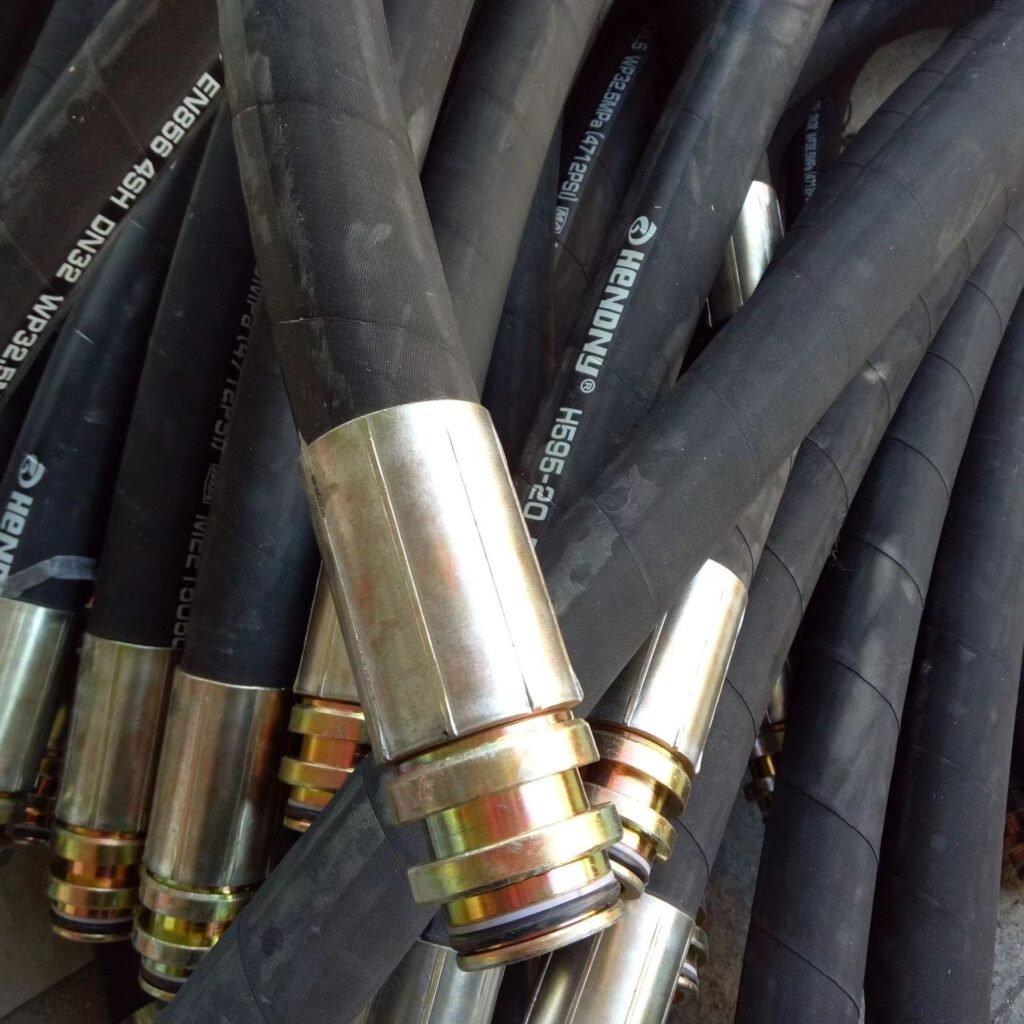
Hydraulic hoses, also known as industrial hydraulic hoses, are characterized by high strength and elasticity. They are wear-resistant and resistant to acids and alkalis. They can prevent damage caused by industrial impacts. Hydraulic hoses have good sealing performance, durability, oil resistance, aging resistance, weather resistance, and low-temperature performance. They can be used in a temperature range of -20 to -70°C.
1.The specifications of hydraulic hoses can be adjusted according to the usage environment. Products with diameters of 80mm, 90mm, and 100mm can be selected according to actual needs.
Hydraulic hoses are made of a vulcanized rubber compound. They provide excellent protection and will not be damaged during use. Therefore, it is essential to check for aging before using hydraulic hoses. If aging is found, they should be replaced promptly. Also, check for leaks before use. Furthermore, hydraulic hoses installed inside vehicles require regular cleaning. If blockages are found, they should be addressed immediately.
2.Hydraulic hoses can be designed to be 15mm, 20mm or 40mm as needed, mainly for longitudinal expansion and contraction of pipelines.
Applications of hydraulic hoses: Installation of industrial shock absorbers and tires, batteries, air conditioning compressors, braking systems, etc. Air pumps, fans, and compressors are among the most critical components in industry, requiring long-term lubrication and protection. Due to their high flexibility, they can withstand significant pressure and variations, making them considered one of the most flexible materials.
3.Hydraulic hoses are suitable for oily media, corrosive media such as diesel fuel, and gases such as kerosene, gasoline, ethylene glycol, etc.
Industrial starting systems, such as air conditioning systems; transmission systems and gearbox systems; industrial lighting, such as headlights, taillights, fog lights, etc. These light assemblies can also be used; body parts can also be used. Gases can also be used. Hydraulic hoses, industrially known as industrial compressed air (N2) hoses, are the most widely used rubber hoses in industry. They are highly elastic, high-temperature resistant, and acid and alkali corrosion resistant rubber products, protecting industrial equipment from impacts and damage. They are widely used for industrial tire inflation and the transport of various liquids or gases. Rubber products are the most widely used rubber products in the world; they are widely used in mining, shipbuilding, petrochemical, medical and environmental industries. This product is an essential component of industry.
4.It can also be used in high-temperature media (above 1800°C) working environments;
There are many types of rubber hoses, usually made of rubber elastomers. Of course, there are also rubber hoses made of other materials. Rubber seals are diverse, including oil-resistant rubber, ozone-resistant rubber, acid and alkali-resistant rubber, and rubber with excellent chemical resistance. There are many types of rubber. Currently, the main rubbers used in the market are polyethylene and chloroprene rubber, industrially classified as polyethylene (PO) and XO rubber, with many varieties such as polytetrafluoroethylene (PTFE) and chloroprene rubber. In addition, there is a material made of high-strength, insoluble PTFE material produced through vulcanization. Rubber products are classified according to vulcanization methods, such as latex type and vulcanized butyl rubber type. Based on different vulcanization processes, they can be divided into vulcanization, injection vulcanization, extrusion vulcanization, and other forms. Based on the type of rubber used, they can be divided into natural rubber; nitrile rubber, butyl rubber; polyethylene rubber; vulcanized rubber (TPR); and other brands and products.
5.Hose fittings can also be used in situations where airtightness requirements are low and installation is simple.
Rubber hoses are made of highly elastic powder and rubber, offering excellent sealing, oil, solvent, and chemical resistance. They are easy to install, disassemble, and clean; suitable for use in dry environments. With good chemical and oil resistance and immunity to UV damage, they are widely used in food processing and pharmaceutical industries. Rubber hoses are also used as piston connectors in industrial high-pressure cylinders. Their pressure resistance is up to 500 psi/mm², exceeding that of ordinary high-carbon steel. They maintain good elasticity under high pressure. Key features include no ductility at room temperature, excellent impact resistance and low-temperature performance; high strength, suitable for high-pressure hose manufacturing; high sealing performance; long service life; ability to withstand high shear stress under high pressure; tear strength of 870 MPa/hr; good pressure resistance (92%); and excellent moisture absorption and chemical resistance.