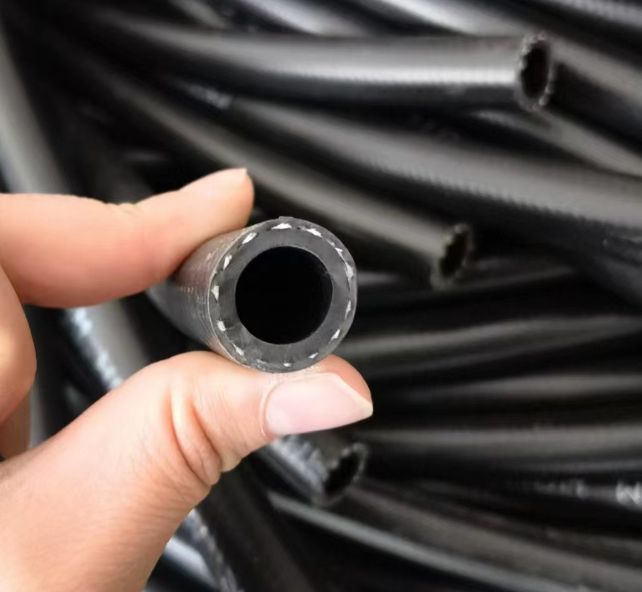
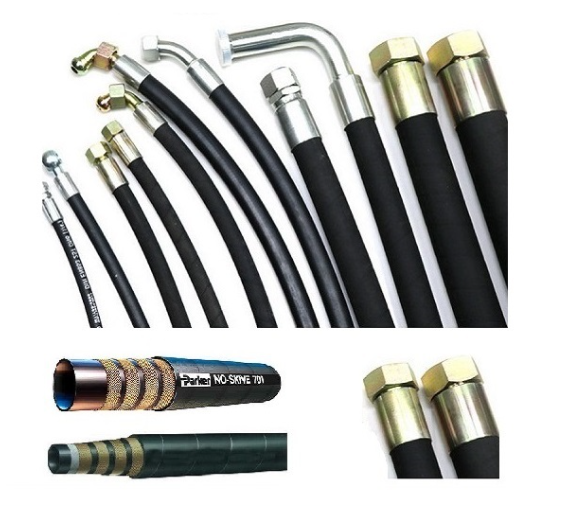
Hoses are specialized tubing widely used to transport fluids from one place to another. They are made of a variety of materials, the most common being PVC and rubber. While these two types of hoses look similar and function similarly, they differ in many ways. Thus, a debate ensues: PVC hoses versus rubber hoses—which is more reliable?
Understanding the key differences is crucial before making a final choice. Imagine buying a hose to transport high-pressure fuel, only to have it melt because it wasn’t designed for that purpose. Choosing the wrong hose can not only lead to breakage but also financial losses. Are you still struggling to decide which hose is right for you? Don’t worry! This guide will briefly introduce the differences between rubber hoses and PVC hoses. Let’s get started!
As I mentioned above, PVC hoses and rubber hoses may look very similar. However, there are many differences between them, from composition to durability. In this section, I will discuss some common differences to prevent you from ending up choosing the wrong hose. Let’s begin!
- Material Composition
A significant difference between PVC and rubber lies in their composition. For example, PVC hoses are made from a special plastic called “polyvinyl chloride.” It is a synthetic or man-made plastic polymer composed of multiple monomers. In addition to PVC, manufacturers add plasticizers, stabilizers, and additives to increase flexibility.
Conversely, rubber hoses are made from natural or synthetic rubber. Natural rubber comes from the latex of rubber trees and is processed into rubber hoses through multiple steps. Synthetic rubber hoses typically use ethylene propylene diene monomer (EPDM) or nitrile rubber to withstand extreme conditions.
- Flexibility
Flexibility is the most common difference between rubber hoses and PVC hoses. Flexibility refers to how easily a hose can be bent without breaking. Rubber hoses are inherently elastic, making them highly flexible. Why? Because they have higher tensile strength, meaning you can stretch and bend them without risking breakage.
On the other hand, PVC hoses are less flexible and more rigid due to their lower elasticity and tensile strength. These hoses are prone to breaking when bent or compressed. As I mentioned above, stabilizers are added to enhance flexibility. However, these stabilizers begin to lose flexibility and become brittle at low temperatures.
- Durability and Strength
Durability is the most crucial factor differentiating between the two types of hoses. Why? There’s a correlation between strength and flexibility. The higher the flexibility, the stronger the hose. For example, PVC hoses are less flexible and more prone to hardening and cracking. Furthermore, when exposed to ultraviolet light, the plastic components lose both flexibility and strength.
Conversely, rubber hoses possess superior durability and flexibility. They can withstand twisting, bending, and stretching without breaking. This is thanks to their impact resistance, meaning they can absorb shocks and maintain their shape. Additionally, rubber hoses have a longer lifespan in a wider range of environmental conditions.
- Temperature Resistance
Temperature resistance refers to the hose’s ability to withstand both high and low temperatures. Rubber hoses and PVC hoses differ in this respect. For example, PVC hoses have a melting point of 60°C, so they soften and begin to melt above this temperature. Furthermore, these hoses become brittle and break at temperatures below -10°C. This means PVC hoses can withstand low to medium temperatures.
On the other hand, rubber has a melting point of 120°C, higher than PVC. Rubber hoses remain strong when heated and do not bend or soften. Moreover, these hoses do not lose their flexibility or become brittle under freezing conditions down to -40°C. This means rubber hoses can even withstand frost conditions.
5-Pressure Handling
Hose are well known for transporting high-pressure liquids and gases. Pressure resistance is one of the key differences between PVC hoses and rubber hoses. How exactly do you tell the difference? Actually, PVC hoses are made of lightweight plastic. Therefore, high-pressure liquids can cause PVC hoses to swell and eventually burst. Furthermore, high pressure can cause the hose edges to kink, thus hindering fluid flow.
Therefore, the maximum pressure a PVC hose can withstand is 50-300 PSI. On the other hand, rubber hoses have excellent pressure resistance. This is because they are more flexible and slightly heavier than PVC hoses. Therefore, these hoses will not kink under high pressure and ensure smooth fluid flow. For example, rubber hoses can withstand pressures up to 300-6,000 PSI without bursting or swelling.
- Chemical Resistance
Chemical resistance is a common difference between composite hoses and rubber hoses. This difference also exists between rubber hoses and PVC hoses. For example, PVC hoses typically contain additives to improve their flexibility. These additives also enhance their chemical resistance to some extent. For example, they can withstand weak acids, detergents, and non-corrosive liquids.
However, PVC hoses are not suitable for conveying fuels, strong alkalis, acids, and gasoline. These chemicals will break down the plastic, causing the hose to melt. Rubber hoses, on the other hand, have extremely high resistance to a wide variety of chemicals. They have reinforcing layers that make them more resistant to corrosive substances. Rubber hoses can efficiently convey gasoline, strong alkalis, acids, and irritating solvents over long distances.
- Weight and Handling
Weight and handling are other factors that differentiate rubber hoses from PVC hoses. In this respect, PVC hoses are clearly superior. Why? Essentially, these hoses are made of a lower-density plastic. This means they are lightweight, easy to install, and can be moved from one place to another. Because of their light weight, you can roll these hoses up and store them easily.
Keep in mind that PVC hoses, being lighter, are prone to kinking, which reduces their stability under high pressure. Conversely, rubber hoses are heavier due to their denser rubber structure. These hoses are more difficult to handle and move, and require more effort to store and wind up. However, the higher density helps them remain stable under high pressure, preventing kinking or bursting.
- Environmental Impact
Environmental impact refers to the impact of a building on the environment. For example, PVC hoses are made from petroleum-based materials, such as additives. Therefore, they release harmful chemicals such as dioxins into the environment. These chemicals can negatively affect humans and other organisms. Furthermore, PVC hoses are not biodegradable.
This means they take hundreds of years to decompose. Therefore, most PVC hoses end up in landfills, causing pollution after use. In contrast, rubber hoses have a smaller environmental impact. Why? First, natural rubber is biodegradable, meaning it decomposes naturally without causing pollution. Furthermore, rubber can be recycled and reused, contributing to sustainable environmental development.
9- Applications
Due to various differences, the applicability of the two types of hoses also differs. Let’s discuss their applications one by one. PVC reinforced hoses are commonly used for:
Gardens and irrigation systems for watering plants.
They are low-pressure hoses, therefore used in compressors and pneumatic tools.
Some food-grade PVC hoses can convey drinking water.
They are used for water circulation in swimming pools and hot tubs.
Now, let’s look at some typical applications of rubber hoses;
These hoses are used for conveying fuels and oils.
Rubber hoses can withstand high pressure in hydraulic systems and machinery.
They are used for the safe transport of heavy chemicals.
Rubber hoses are used to convey steam and hot water in various industries.
10- Cost and Affordability
Finally, and equally importantly, cost is another factor differentiating these types. In terms of manufacturing, PVC hoses are a cost-effective option. Why? First, their raw materials are readily available. These hoses are known to be made from synthetic plastics, which are readily available. Furthermore, PVC hoses are easy to process due to their light weight, thus reducing manufacturing costs.
While these hoses are cheaper initially, they may require more replacements and maintenance, so their overall cost may be higher in the long run. Rubber hoses, on the other hand, have a higher initial cost. This is due to their expensive raw materials and complex manufacturing process. However, these hoses are worthwhile in the long run due to their greater durability and lifespan.
PVC Hose vs. Rubber Hose: Which Should You Choose?
PVC hoses and rubber hoses each have their own characteristics. Therefore, choosing the right hose for your specific needs can be tricky, right? But there are some factors that can help you make an informed choice. We’ll discuss these in this section.
First, understand the nature of your project. For example, PVC hoses are suitable for light-duty operations such as low-pressure water delivery. However, rubber hoses are very reliable for heavy-duty operations. You can use them to deliver hot water and irritating chemicals.
Consider the durability and strength of each hose. For example, PVC hoses are relatively less durable. They soften at high temperatures, so they are best used in milder environments. Rubber hoses, on the other hand, are inherently durable and can withstand both high and low temperatures, so you can use them in any environment.
Another factor to consider is their flexibility and weight. For example, PVC hoses are less flexible but lighter. Therefore, you should use them where ease of use is a priority. Rubber hoses are more flexible but heavier. Therefore, you can use them in harsh working conditions and maintain stability.
When choosing hoses, consider environmental sustainability. For example, less environmentally friendly polyvinyl chloride (PVC) takes hundreds of years to decompose, causing pollution. Natural rubber hoses, however, are more environmentally friendly because they decompose quickly and do not cause pollution. Synthetic rubber still has some environmental impact, so choose a more sustainable option.
Finally, consider your budget and maintenance costs. For example, if you are on a tight budget, you might consider PVC hoses. However, PVC hoses require more maintenance and replacement, which increases costs. On the other hand, rubber hoses have a higher initial price, but their durability and long lifespan make them reasonably priced.
Conclusion
Hose are crucial for conveying critical liquids and gases. Hose materials vary, with rubber and PVC being the most common. These hoses may look similar at first glance, but their performance differs significantly. For example, PVC hoses are lightweight but less flexible. Therefore, they are less durable and can only convey low-pressure liquids.
PVC hoses are cheaper and suitable for moderate to light-duty operations. Conversely, rubber hoses are more durable and flexible. They can handle a wide range of chemicals and easily withstand both low and high temperatures. Therefore, their initial cost is higher. However, I recommend rubber hoses because of their durability and better long-term value.