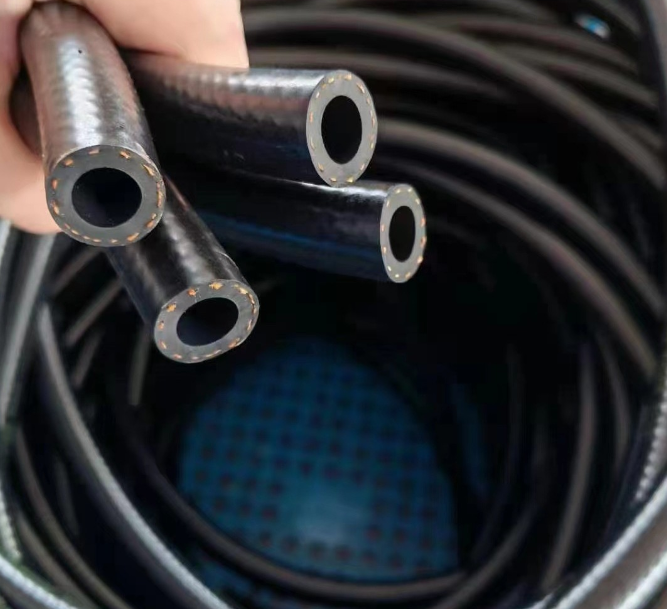
NBR is a type of rubber foam material. NBR foam, also known as nitrile butadiene rubber, has low density, good weather resistance, is waterproof and vapor-proof, oil-resistant, and environmentally friendly. NBR is used as a sealing, sound insulation, vibration damping, and heat insulation material in the automotive, electronics, and air conditioning industries.
What is the difference between NBR and silicone?
NBR is a type of plastic elastomer. An elastomer is a polymer material with a glass transition temperature below room temperature, an elongation at break >50%, and good recovery after the removal of external force.
Nitrile butadiene rubber elastomer is a special type of elastomer. Nitrile butadiene rubber elastomer has a very wide range of hardness and functional properties, making it a polymer material between rubber and plastic. It can be heated and plasticized. Chemically, it has little or no cross-linking. Its molecules are essentially linear, but with some physical cross-linking. This type of nitrile butadiene rubber is called NBR.
Differences between the two:
- Price difference.
NBR is significantly more expensive than silicone. Medical-grade NBR is frequently used in medical supplies, which are closely related to human use and even implantation. From a price perspective alone, NBR is recyclable, making it more cost-effective in the long run.
- Quality difference.
Silicone has slightly less elasticity. Visually, NBR can be very transparent, while silicone cannot; it appears hazy, like a thick fog. This transparency makes NBR more popular with users. Furthermore, there are many higher-end products available, offering greater choice and more pattern variations than silicone. Generally, NBR is harder than silicone, making it more ergonomic.
- Feel difference.
Silicone sleeves also have a good feel and provide shock and impact resistance when dropped. Silicone is insoluble in water and has good waterproof properties, but it is thicker, has fewer styles, is prone to greasiness, has slightly poorer adhesion, and is more likely to attract dust and dirt. In comparison, NBR has high wear resistance, good scratch resistance, high strength, outstanding cold resistance, oil and water resistance, mildew resistance, and good flexibility. The only drawback of NBR is that it is not easy to demold, which reduces production efficiency.