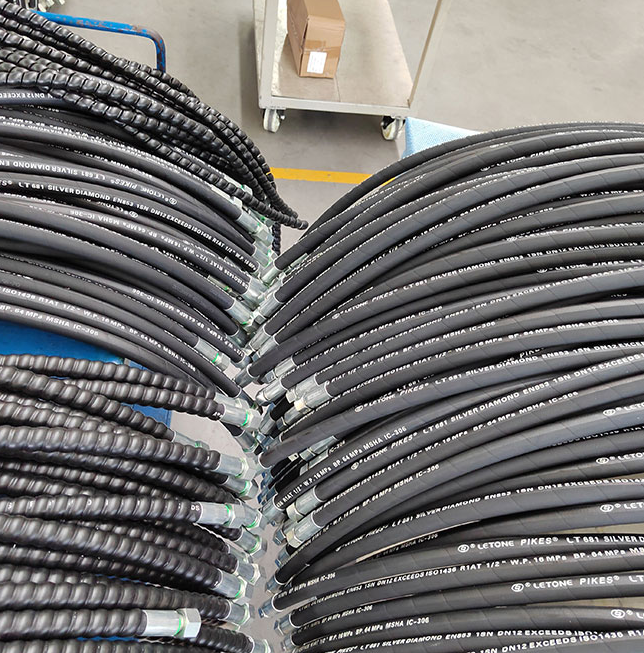
Hydraulic hoses are a crucial transmission medium in hydraulic systems, and their quality directly impacts the stable operation and safety of the system. Below are some methods for testing the quality of hydraulic hoses:
- Visual Inspection: Carefully observe the appearance of the hydraulic hose, including surface smoothness, color uniformity, and the presence of obvious scratches or damage. High-quality hydraulic hoses should have a smooth surface without obvious defects.
- Tactile Inspection: Judge the quality of the hydraulic hose by touch. It should feel soft and elastic. Gently bend the hose; a high-quality hose should have a certain degree of elastic recovery and not easily deform.
- Inner and Outer Diameter Check: Use tools such as outside and inside calipers to measure the inner and outer diameters of the hydraulic hose and compare them with the specifications. High-quality hydraulic hoses should have accurate dimensions and specifications to ensure compatibility with the hydraulic system.
- Pressure Resistance Test: Connect the hydraulic hose to the hydraulic system and test its pressure resistance by increasing the pressure. High-quality hydraulic hoses should be able to withstand the system’s specified operating pressure without leaking or rupturing.
- Metal Inspection: Metal flaw detectors and other tools are used to inspect hydraulic hoses for potential metal cracks or defects. This helps determine the quality and reliability of the hydraulic hoses.
- Chemical Composition Analysis: Chemical composition analysis of the hydraulic hose materials is performed using chemical analysis instruments to ensure that the materials meet relevant standards. High-quality hydraulic hoses should use superior materials with corrosion resistance and high-temperature resistance.
- Bending Test: The hydraulic hoses are subjected to a certain degree of bending test to examine their bending performance. High-quality hydraulic hoses should have sufficient bending strength and be resistant to breakage or deformation.
In summary, the quality of hydraulic hoses can be judged by observing their appearance, feel, checking dimensions, pressure resistance testing, metal flaw detection, chemical composition analysis, and bending tests. When purchasing hydraulic hoses, choose reputable manufacturers and suppliers to ensure product quality and retain purchase receipts for future rights protection and complaints. At the same time, hydraulic oil pipes should be inspected and maintained regularly to ensure their safety and reliability during use.